
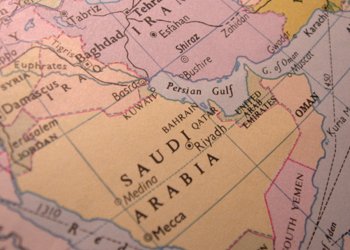
A Saudi Arabian renewables initiative is expecting to secure an investment worth $109 billion (£69.6billion) to develop the nation’s solar industry.
The Kingdom Abdullah City for Atomic and Renewable Energy (Ka-care) project was launched to help meet the Arab state’s growing energy needs and reduce its dependence on fossil fuels.
The initiative is expected to provide a third of the state’s electricity demand within the next twenty years.
Reports claim Saudi Arabia’s Government has aimed to install 41,000MW of solar capacity by 2032.
Maher al-Odan, a consultant at Ka-care said: “We are not only looking for building solar plants. We want to run a sustainable solar energy sector that will become a driver for the domestic energy for years to come.”
The Government also has a target to install 21,000MW of nuclear, wind and geothermal sources within the next two decades. It has also planned to cut oil consumption and expects the initiative will help save an average of 523,000 barrels a day within the next 20 years.
July 20th, 2012 at 2:44 pm
Very smart move. It is time oil producers and oil companies realized that weaning the world off oil will allow the price of oil to rise way above the general cost of living. For example, at present, the embedded energy cost of a loaf of bread at a supermarket is high. So, whatever the cost of oil, the cost of bread will rise in proportion to the rise in cost of oil. Other costs will follow suite and before you know it fuel and food will cost the consumer comparatively speaking much the same. Make food and other consumables production much less dependent on oil and any rise in cost of oil will hardly be felt by the supply chain and will not drag the cost of other products with it. Oil producers will increase their buying power and can invest their exploding wealth in more renewables infrastructure, and further uncouple the cost of oil from every other product,or reduce their oil production and extend the life of their resource or use the increased value of oil to explore for more expensive deposits .
Report comment Report comment