Tag Archive | "China"

Guest Blog: Mervyn Bowden – Village idiots behind bonkers EU solar panel move?

Tags: , , , , , , ,

Guest Blog: Mervyn Bowden – Village idiots behind bonkers EU solar panel move?

Posted on 11 June 2013 by Vicky Ellis

I never cease to be amazed at the roller-coaster mentality which has invaded what is a potentially huge cash earner and employer in the UK.

What am I talking about? The renewable energy market, especially solar PV. Despite immense obstacles it has shown signs of growing in a difficult UK market.

Not that you’d think that was desirable – given the EU’s recent strange decision to impose levies on solar panel imports.

Where have the village idiots gone? To the EU

Am I alone in thinking that the EU Commission, European governments, not least our own, are supposed to be encouraging the take-up of technologies like solar? Maybe not.

I suspect our once thriving population of village idiots, noticeable by their absence these days, has now migrated to the policy team at the EU Commission. The thinking defies logic…

“This is not protectionism” – or is it?

I’m sure it has absolutely nothing whatsoever to do with a German propensity to look after its own solar PV panel manufacturing, principally in the old East Germany and heavily labour intensive – despite the German Government supposedly positioning against a levy.

Perhaps I was naïve to think the days of trade protectionism were a long way behind us. This is a horribly dangerous precedent, almost guaranteed to provoke reciprocal action by the Chinese – and it could go way beyond the issue of solar panels.

Perhaps we don’t already have sufficient inflationary pressures – perhaps we should continue to artificially inflate the price of items we’d like to be used more? BONKERS.

I have to declare an interest here – I work with a number of companies involved in renewable generation both at the developer and user end.

The grave uncertainties which have been caused over recent years through feeble legislation, oscillation on subsidies and a general cloak of volatility around the whole subject has been powerful in shooting everyone in the industry in the foot.

Business could be quids in with solar

At a time when power purchase agreements (PPA) from solar PV schemes can be secured at around 8-10p/kWh, with simple cash paybacks of 5-7 years and with return on investment up to around 20%, this is no time to rock the boat.

Now should be THE time for everyone to urgently consider coating their roofs, car-park perimeters or brownfield sites as a far less intrusive technology compared to some alternatives.

That’s from major property companies through to individual domestic users and even financial organisations like pension funds.
But the message is not getting through.

Tough questions for the EU

Instead, poor decision-making at European level is causing large numbers of jobs in installation and maintenance, rather than the obvious manufacturing sector to be put at risk.

Is it any wonder, given the volatility of pricing influences in this market, that the speculators are having a field day and stockpiling solar panels for potential financial gain?

This is a key question: can our “friends” in the EU Commission give us details of the majority voting needed to bring in what is a crazy stance on “temporary” levies which will effectively put the industry on standby mode?

Comments (0)

Alstom boasts 207m tonnes of carbon cut for customers

Tags: , , , , , ,

Alstom boasts 207m tonnes of carbon cut for customers

Posted on 11 June 2013 by Vicky Ellis

Engineering firm Alstom is boasting it has saved its customers 207million tonnes of carbon emissions a year. The firm points to advances in technology behind the power plants it built and improved between 2002 and 2011.

New analysis by the firm was released last week and covers 1,445 projects undertaken by Alstom over the ten year period, including renewable and thermal power projects.

It measured actual emissions of an Alstom plant in the first year of its operation against the standard emissions of the local plant type that it replaces.

The research which was audited by PricewaterhouseCoopers looked at more efficient gas turbines, steam turbines and boilers for coal-fired plants, pilot installations for Carbon, Capture & Storage.

Alstom says the carbon savings on renewable projects have grown as technology improves and it took on more green energy work, with the figures for hydro and wind rising by more than seventy times in the ten years.

Cutting emissions appears to have been most effective in “growth markets” such as China and India, where CO2 savings for every megawatt installed reached nearly 2,000 tonnes and more than 1,500 tonnes respectively.

Philippe Cochet, Thermal Power President said: “Energy sustainability is the goal we aim for and as these figures prove, we at Alstom push harder and harder each year to deliver cleaner power.”

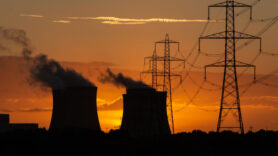
Power plants make up a large chunk of the world’s greenhouse gas emissions: in 2011, the global power generation sector accounted for more than 40%. Last year Alstom completed the Pembroke power station in Wales (pictured) for energy supplier npower. It is meant to be the most efficient gas plant in Europe.

Comments (0)

Stella Artois brewer plans Olympian water use cuts

Tags: , , , , , , , , , ,

Stella Artois brewer plans Olympian water use cuts

Posted on 10 June 2013 by Vicky Ellis

The German brewer behind Stella Artois and Becks has set itself targets to slash water use and waste over the next five years.

Anheuser-Busch InBev (AB InBev) has 200 beer brands and has facilities in 24 countries such as its brewery in Leuven, Germany (pictured).

It wants to cut its global water usage to 3.2 hectolitres of water per hectolitre of production, the equivalent of about 5,400 Olympic-sized swimming pools.

Another of the brewer’s targets is to reduce packaging by 100,000 tons, the equivalent of around a quarter of a billion full cans of beer.

The firm also plans to bring in watershed protection measures – which means managing how their water drains into local lakes or rivers – at all its facilities in key areas in Argentina, Bolivia, Brazil, China, Mexico, Peru and the United States.

Carlos Brito, CEO of Anheuser-Busch InBev said: “Our approach recognises that there isn’t a one-size-fits-all solution to improve sustainability. The key will be to leverage the experience and expertise of our colleagues globally, foster a collective approach through partnerships with local stakeholders and continue to scale best practices across our company.”

Comments (0)

Coal mine gas explosion ‘kills 10′ in China

Tags: , , , , , , , ,

Coal mine gas explosion ‘kills 10′ in China

Posted on 03 June 2013 by Priyanka Shrestha

Ten people have been reported dead following a colliery gas explosion in central China.

The blast at Simachong coal mine in Shaoyang City is believed to have taken place around 7:55pm yesterday. Chinese reports claim a total of 39 miners were working underground when the accident took place but only 29 were lifted to safety. Investigations are currently underway.

The news follows gas explosions in coal mines last year in East China’s Anhui province in October and in the southwest province of Sichuan in August.

China also saw another oil tank blast in the northeast region yesterday afternoon, with two people believed to be severely injured and two others missing.

Reports claim two explosions were heard at an oil refinery in Dalian owned by China National Petroleum Corporation. More than 300 firefighters were at the scene and the fire is said to have been put out by 4:30pm. According to reports, the injured are in “life threatening” conditions in the hospital.

Earlier this year an explosion at a power firm in Mexico also killed at least 25 people and another Russian coal mine blast killed nine.

Comments (0)

China’s plastic bag ban ‘saves 6m tons of oil’

Tags: , , , , , ,

China’s plastic bag ban ‘saves 6m tons of oil’

Posted on 31 May 2013 by Priyanka Shrestha

A plastic bag ban launched five years ago in China has helped the country save six million tonnes of oil, Chinese media reported.

It has also helped cut the use of plastic bags by more than two thirds, equivalent to around 67 billion as more consumers are using reusable cloth-made bags, reports claim.

China banned offering free plastic bags in supermarkets and department stores as well as prevent the production and use of bags thinner than 0.025mm starting from June 1, 2008.

Prior to the ban, an estimated three billion plastic bags were used daily across China, resulting in more than three million tons of waste each year. The nation consumed an estimated five million tons or 37 million barrels of crude oil every year to produce plastics for packaging, figures suggest.

Comments (0)

Shanghai Disneyland plans a ‘green’ future

Tags: , , , , , , , ,

Shanghai Disneyland plans a ‘green’ future

Posted on 31 May 2013 by Priyanka Shrestha

The new Shanghai Disney Resort is installing a low carbon power source in a bid to be more environmentally friendly.

The theme park in China which will open in 2015 is installing a Combined Cooling, Heating Power Plant (CCHP). That is a gas-fired power facility which generates cooling and heating from engine waste heat and produces compressed air by self-generated electricity.

It will supply the resort’s daily heating, power and cooling needs and is expected to cut greenhouse gas emissions by 60% and be three times more energy efficient than if it only used the grid.

Mike Crawford, General Manager for the resort said: “Shanghai Disney Resort has been devoted to seeking new technology and business solutions which reduce our impact on environment, save resources and promote sustainable technology.

“The CCHP project is an excellent example of partnership, localisation and Disney’s long-term commitment to environment protection. We are excited to be creating a world-class destination here in Shanghai to showcase environment friendly and leading Chinese and international technologies.”

The theme park (pictured, an artist’s representation) has a building budget of 24.5 billion yuan (£2.6bn) and an extra 4.5 billion yuan (£0.48bn) will be spent to build hotels and restaurants. Disney owns 43% of the property whilst the rest is held by state-controlled Shanghai Shendi Group.

Comments (0)

Japan forecast to install $20bn worth of PV systems

Tags: , , , , , , , , ,

Japan forecast to install $20bn worth of PV systems

Posted on 30 May 2013 by Priyanka Shrestha

Japan could install $20 billion (£13.15bn) worth of solar systems and could become the “world’s largest” PV market in terms of revenue this year.

New research by analysts at IHS revealed a total of 1.5GW worth of solar systems were installed in the first quarter of this year, up from 0.4GW the same time last year. Although Japan is forecast to have fewer installations compared to China, the high prices of PV systems in Japan could help increase revenue, the analysts claim.

They predict the growth to continue increasing this year as demand for solar energy is forecast to double. They expect Japan’s share of global PV system revenue to rise to 24% this year, up from 24% last year and just 9% in 2011.

Sam Wilkinson, Solar Research Manager at IHS said: “Following the earthquake and tsunami in 2011 that led to the shutdown of nuclear facilities and a shortage of electricity, Japan has aggressively moved to promote solar energy. Japan’s Government has introduced a highly attractive feed-in tariff (FIT) to help stimulate solar growth.

“In contrast, the European market that historically has led global solar demand is slowing as regional market conditions become less attractive. The deceleration in Europe and the implementation of the FIT in Japan are combining to propel the country to the top of the global solar market this year.”

Comments (0)

UK losing chance to be “safe harbour” for renewables

Tags: , , , , , ,

UK losing chance to be “safe harbour” for renewables

Posted on 29 May 2013 by Vicky Ellis

The UK is losing out on the chance to be a “safe harbour” for renewable energy in Europe, according to a new report on the sector released by Ernst&Young today.

Delays to the Energy Bill because of political infighting risk squandering the country’s “promising prospects”, suggests the analysts’ tenth anniversary edition of its Renewable Energy Country Attractiveness Indices (RECAI).

Although the UK is ranked top for offshore wind, closely followed by Germany and China, comes in second for biomass behind Germany and fourth for onshore wind, Ernst&Young experts believe this strong position could be weakened.

Ben Warren, Environmental Finance Leader at Ernst & Young said: “We are at a stage where the UK is presented with a unique opportunity to become a safe harbour for renewable energy investment in Europe. The foundations are there, reflected by the UK’s consistent performance in our index and its current 5th place ranking, as well as its huge offshore wind potential.”

The report also mentions the UK Government has underwritten £75m in biomass loans and plans to award “final investment decisions” for several large-scale projects ahead of “contract for difference” strike prices being released. However the report suggests tax breaks for shale gas and the continuing tussle over the cost of new nuclear power send “mixed policy signals”.

Mr Warren added: “Competing visions and strategies within the Government about the country’s future energy mix, pose serious questions amongst investors about whether we can compete for capital on a global level.”

Comments (0)

Beijing plans to bin coal-fired boilers?

Tags: , , , , ,

Beijing plans to bin coal-fired boilers?

Posted on 28 May 2013 by Vicky Ellis

Images of Chinese city-dwellers wearing white masks over their nose and mouth to avoid breathing in coal dust could become a rarity if authorities get their way: Beijing hopes to bin most coal-fired boilers in its city centre in a bid to cut air pollution by the end of 2015.

The Chinese capital wants to cut coal use by 1.4 million tons this year, on the back of cutting coal by 700,000 metric tons last year, it was reported today.

Beijing intends to use no more than 21.5 million tons of the fossil fuel according to China Daily, citing the city’s Environmental Protection Bureau’s 2013 coal use plan and Commission of Development and Reform.

Comments (0)

Running shoes leave large carbon footprint

Tags: , , , , , , , ,

Running shoes leave large carbon footprint

Posted on 24 May 2013 by Priyanka Shrestha

You may be putting your running shoes on to keep fit but it may be doing more harm to the environment than you may think.

According to researchers at the Massachusetts Institute of Technology (MIT), a new pair of typical running shoes generates 30 pounds of carbon emissions, equivalent to keeping a 100-watt light bulb switched on for one week.

Their research revealed more than two thirds of the carbon impact came from manufacturing plants and only a small portion from extracting raw materials. A significant proportion of the world’s shoe manufacturers are in China, where coal is the dominant source of electricity. It is also used to generate steam or run other processes in the plant itself.

A typical pair of running shoes comprises of 65 discrete parts requiring more than 360 processing steps to assemble, from sewing and cutting to moulding, foaming and heating. The researchers found that for these small, light components such processes are energy intensive – and therefore carbon intensive – compared to the energy that goes into making shoe materials like polyester.

Randolph Kirchain, Principal Research Scientist in MIT’s Materials Systems Laboratory said the research could help shoe designers identify ways to improve designs and reduce shoes’ carbon footprint. He added the findings could also help industries assess the carbon impact of similar consumer products more efficiently.

“Understanding environmental footprint is resource intensive. The key is, you need to put your analytical effort into the areas that matter. In general, we found that if you have a product that has a relatively high number of parts and process steps and that is relatively light [weight], then you want to make sure you don’t overlook manufacturing,” he said.

Nearly 25 billion shoes were purchased around the world in 2010, the majority of them manufactured in China and other developing countries.

Comments (0)