Tag Archive | "Iraq"

Iraq finds ‘extra billion barrels’ of oil

Tags: , , , ,

Iraq finds ‘extra billion barrels’ of oil

Posted on 21 January 2013 by Vicky Ellis

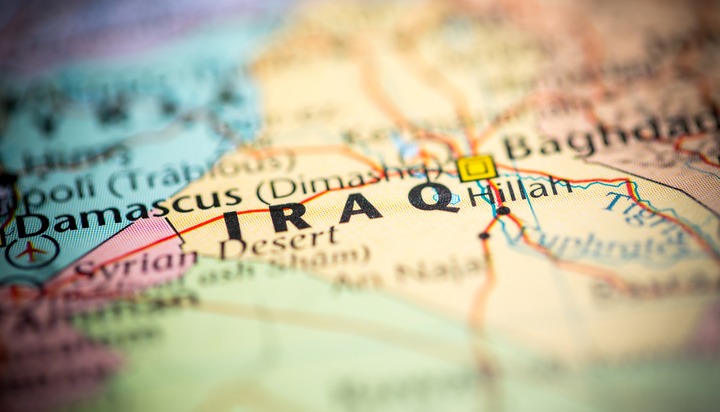
Middle Eastern nation Iraq has found an extra billion barrels worth of oil, its oil ministry announced over the weekend. The first oil exploration by state-owned companies in around 30 years threw up the discovery.

Exploration began in the southern province of Maysan, oil ministry spokesman Assem Jihad told AFP.

Mr Jihad told the news agency: “The initial assessment from this discovery is about one billion barrels of oil… It will increase production capacity for [state-owned] Maysan Oil Company.”

Despite being the 11th largest oil producer in the world last year Iraq could be one of the few places left where vast oil reserves haven’t been exploited, according to the US Energy Information Administration.

Comments (0)

Iran plans ‘Friendship’ gas pipeline to Syria

Tags: , , , , , , , , ,

Iran plans ‘Friendship’ gas pipeline to Syria

Posted on 16 January 2013 by Priyanka Shrestha

A gas pipeline named ‘Friendship’ is set to be built across Iran, Iraq and Syria territories in an effort to deepen “regional and religious ties”.

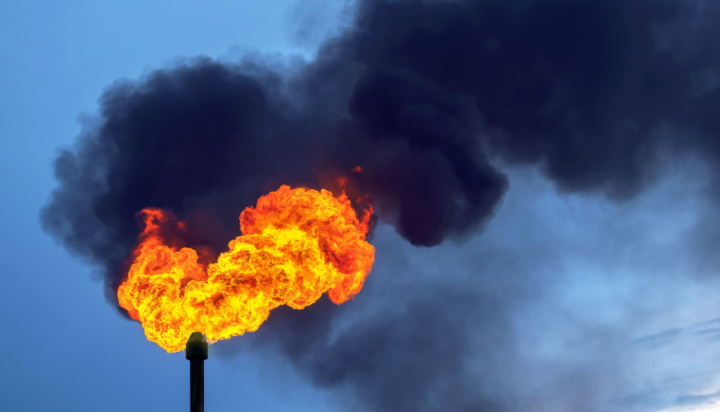
Pars Oil and Gas Company (POGC), a subsidiary of National Iranian Oil Company (NIOC), claims the 56-inch pipeline will start from the onshore installations of the firm’s South Pars gas field (pictured) and will reach the Iran-Iraq border to feed three power plants in the neighbouring country.

The gas field lies on the border between Iran and Qatar, with the Iranian part believed to consist of around 14 trillion cubic metres of gas reserves and around 18 billion barrels of gas condensates, which POGC claims amounts to roughly 7.5% of the world gas reserves.

A spokesperson from the Iranian Petroleum Ministry said Iran and Iraq have already taken “some steps” for the construction of the pipeline and that a meeting in Baghdad in the near future would draft the necessary programme for extending the pipeline to Syria.

The pipeline is believed to be designed in a way that would have enough capacity to export gas to other countries including Jordan and Lebanon and is likely to be extended to the border of some European countries, if necessary, to meet their gas needs.

Last year, the nation also announced plans for a gas pipeline between Iran and Pakistan named ‘Peace’ to transfer Iran’s gas to Pakistan.

Comments (0)

Iran begins gas pipeline to Syria

Tags: , , , ,

Iran begins gas pipeline to Syria

Posted on 19 November 2012 by Vicky Ellis

Iran has begun building a new $10billion gas pipeline connecting it to Syria, the semi-official Iranian news agency Fars reported today.

The 225km pipe, the first phase of a bigger 1,500km line, will take the country’s gas reserves to Iraq and Syria, a provincial official is reported as saying.

It will be completed by June 2013 with an investment of $3billion (£1.9bn).

Iran has the world’s second largest natural gas reserves after Russia, according to the US Energy Information Administration.

Comments (0)

US to be world’s largest oil producer

Tags: , , , , , , , , , , ,

US to be world’s largest oil producer

Posted on 12 November 2012 by Priyanka Shrestha

The US will overtake Saudi Arabia and Russia to become the largest global oil producer by 2020.

That’s because of a continued fall in US oil imports, according to the International Energy Agency (IEA) in its ‘World Energy Outlook 2012’ report. It predicted the drop in imports could also make North America a net oil exporter around 2030, which would mean a “sea-change” in the direction of international oil trade, with almost 90% of Middle Eastern oil exports being drawn to Asia by 2035.

Maria van der Hoeven, IEA’s Executive Director said: “North America is at the forefront of a sweeping transformation in oil and gas production that will affect all regions of the world, yet the potential also exists for a similarly transformative shift in global energy efficiency.”

The report also presented the results of an ‘Efficient World Scenario’, which showed what energy efficiency improvements can be achieved simply by adopting measures “that are justified in economic terms”. IEA predicted more efforts on efficiency could cut the growth in global energy demand by half but due to the “disappointingly slow progress in global energy efficiency” over the last decade, the potential would not be realised.

Faith Birol, IEA’s Chief Economist and the report’s lead author said: “Our analysis shows that in the absence of a concerted policy push, two-thirds of the economically viable potential to improve energy efficiency will remain unrealised through to 2035. Action to improve energy efficiency could delay the complete ‘lock-in’ of the allowable emissions of carbon dioxide under a 2ºC trajectory – which is currently set to happen in 2017 – until 2022, buying time to secure a much-needed global climate agreement. It would also bring substantial energy security and economic benefits, including cutting fuel bills by 20% on average.”

The report also suggested fossil fuels would remain dominant in the global energy mix, supported by subsidies, which jumped by almost 30% to $523 billion (£329.4 billion). Global oil demand is expected to grow by 7 million barrels a day (mb/d) to 2020 and exceed 99 mb/d in 2035. Iraq would account to 45% of the growth in global oil production to 2035, becoming the second-largest oil exporter in the world.

Renewables are expected to account for almost one-third of the total electricity output by 2035, with the most growth in solar power. It is also predicted to be the world’s second-largest source of power generation by 2015, with coal as the primary source of global electricity by 2035.

Global energy demand could grow by more than one-third by 2035, with China, India and the Middle East accounting for 60% of the increase.

Comments (0)

Iraq to spend $1.6bn on renewables

Tags: , , , , , , ,

Iraq to spend $1.6bn on renewables

Posted on 19 October 2012 by Priyanka Shrestha

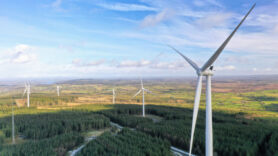
Iraq plans to spend up to $1.6 billion (£995 million) on solar and wind power in the next three years.

Reports claim it is part of the nation’s plans to add 400MW to its National Grid to help manage the daily blackouts that still occur in many parts of the country. Statistics have shown the Middle East nation only produces around 8,800MW out of the 14,000MW it needs.

The country’s Ministry of Electricity said around 25 firms have already been asked to manufacture and install solar and wind power plants.

According to reports, the Ministry has given an initial $200 million (£124.5 million) from its 2013 budget to add 50MW to the grid next year.

Iraq aims to reach 22GW of power generation capacity to meet its demand by 2016 by upgrading and building new power projects to minimise the shortages.

Comments (0)

Iraq’s oil output to double by 2020

Tags: , , , , , , , , ,

Iraq’s oil output to double by 2020

Posted on 10 October 2012 by Priyanka Shrestha

Iraq’s oil production could more than double by the end of this decade.

That’s the prediction by the International Energy Agency (IEA) in its recent ‘World Energy Outlook’ report, which said the Middle East nation could produce more than six million barrels of oil per day (b/d) by 2020.

Its current oil production is around three million b/d and the figure could rise to more than 8 million b/d by 2035, which means Iraq could make by far the largest contribution to global oil supply growth in the next few decades.

Maria van der Hoeven, IEA’s Executive Director said: “This landmark study confirms the increasing importance of Iraq to the global energy system, highlighting the key role it is expected to play in meeting growing energy needs and the responsibilities it will assume as a strategic source of world oil supply.”

However, the report also suggests the rising energy demand is still a critical challenge as many parts of the nation still experience power cuts on a daily basis. But if its planned capacity is delivered on time, electricity generation could meet Iraq’s demand for power in 2015. It can then also provide a supply of gas to neighbouring countries, European markets and Asia.

The country is also expected to gain almost $5 trillion (£623.7 billion) from exporting oil up to 2035 as long as it invests more than $530 billion (£330.6 billion) on raising its energy output.

Comments (0)

OPEC: Financial sector needs more regulation

Tags: , , , ,

OPEC: Financial sector needs more regulation

Posted on 15 June 2012 by Vicky Ellis

The financial sector needs far better regulation to counter the “disturbing” volatility of oil prices, according to the Organisation of Petroleum Exporting Countries (OPEC).

The call comes as the Middle Eastern oil group noted yesterday how Eurozone sovereign debt fears have led to a “marked and steady fall” in oil prices in the past two months.

At the group’s bi-annual meeting in Vienna, Austria, OPEC countries decided to keep a ceiling for oil production at 30million barrels per day – a level which was originally set in December 2011, although analysis suggests it was overshooting this amount earlier this year.

Despite OPEC members agreeing there was plenty of oil on the market to cope with the growing world oil demand predicted this year, the President of the conference warned prices are still “disturbingly” volatile.

HE Abdul-Kareem Luaibi Bahedh, Minister of Oil of Iraq told the conference: “There is a still a disturbing level of price volatility. When we last met, the average weekly price of OPEC’s Reference Basket was around US $109 a barrel. It then rose to almost $124/b half-way through this six-month period, before falling again. Most recently, however, the price has become extremely volatile, with the Basket at one stage losing $9.65/b in just four days.”

Adding this was a “matter of much concern”, he repeated the group’s calls for better regulation of the international financial sector.

Comments (0)

Exxon blocked from bidding for Iraqi oil

Tags: , , , , ,

Exxon blocked from bidding for Iraqi oil

Posted on 16 February 2012 by Vicky Ellis

Iraq is banning ExxonMobil from its latest round of bidding for rights to explore for oil and gas, according to reports.

A spokesman for the Iraqi Government, Faisal Abdullah told the Wall Street Journal: “The Iraqi government has decided that Exxon won’t be allowed to participate in the next oil- and gas-bidding round.”

The Middle Eastern state is apparently unhappy with the US oil giant for allegedly signing to explore oil in Kurdistan with the Kurdish Regional Government (KRG) last November. The Iraqi government disputes the breakaway KRG’s right to deal with its assets.

ExxonMobil would not comment on the reports.

Comments (0)

Iraq gets special focus for IEA 2012 Outlook

Tags: , , , , , ,

Iraq gets special focus for IEA 2012 Outlook

Posted on 16 February 2012 by Tom Gibson

The International Energy Agency (IEA) will closely examine Iraq’s energy sector as part of the 2012 edition of its flagship report, the World Energy Outlook.The organisation believes the energy output from Iraq could be vital on a global scale.

Maria van der Hoeven IEA Executive Director said: “Iraq’s energy sector is both central to the reconstruction and development of the Iraqi economy and of huge importance to the global outlook. The focus on Iraq in this year’sWorld Energy Outlookwill illuminate a central issue for the future of global energy.”

According to the IEA’s World Energy Outlook 2011 central scenario, Iraq is set to become a major oil exporting player between now and 2035, supplying approximately more than five million barrels per day.

The studywill examine the role of the energy sector in the Iraqi economy and trends in domestic energy demand as well as the supply outlook and investment needs. It will also look at impacts on global energy supply and security.

The IEA’s Iraq study will be released in early October.

Comments (0)

OPEC overshoots oil production quota

Tags: , , , , ,

OPEC overshoots oil production quota

Posted on 10 February 2012 by Vicky Ellis

OPEC is overshooting its oil production ceiling by 870,000 barrels per day (b/d), according to new analysis by Platts.

Crude oil output from the Middle Eastern group of producers rose to 30.87 million b/d in January.

In mid-December last year OPEC agreed to cap its output for all 12 members, including Iraq and Libya, at 30 million b/d.

Comments (0)