Posted on 02 April 2012 by Tom Gibson
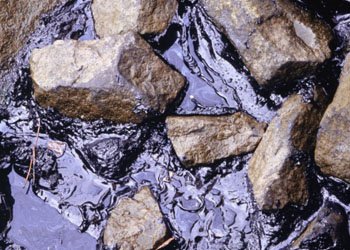
The Government will increase its reporting of oil spill data following the Total gas leak in the North Sea. Energy Minister Charles Hendry said today that improving transparency was important.
Speaking at a joint press conference held today in Aberdeen with the Managing Director of TOTAL, Charles Hendry praised the oil firm for their quick and safe emergency response at the Elgin platform.
Charles Hendry said: “It’s important that this incident is dealt with in an open and transparent way. From the Government’s perspective the Elgin field’s oil pollution emergency plan has been put on the DECC website to give people the opportunity to analyse that information in detail.
Currently spill data is published annually in the Advisory Committee on Protection of the Sea’s report. As of today that information will be published monthly on the DECC website.
Posted on 29 March 2012 by Tom Gibson
The UK is producing less oil and gas than it was in the 1970s. The Government say this decline was due to maintenance activities and slowdowns, which resulted in a net import dependency the highest seen since 1976. Oil production was 17.5% lower than in 2010 and was also the lowest level of production since the 1970′s.
Malcolm Webb, Oil & Gas UK’s chief executive said: “Nobody can be happy with this very worrying set of numbers and the industry and Government must work together to ensure this is a one-off. Up to 24 billion barrels of oil and gas remain to be extracted in the UK and it is imperative that we maximise recovery of those.”
As well as the drop in oil output, the DECC figures also showed production of natural gas in 2011 fell even more sharply than oil and was 21% lower than in 2010. In 2011 imports of natural gas were greater than production for the first time since 1967.
However, there could be light at the end of the tunnel for the UK industry, as the recent budget promised help to the North Sea.
Mr Webb added: “The recent extension of the tax allowance and proposals to bring certainty to tax relief on decommissioning were very welcome but there is clearly more that can be done, particularly to stimulate new investment in existing fields and exploration.”
Posted on 22 March 2012 by Tom Gibson
Even though taxing poor grannies grabbed the headlines, there was plenty of noise coming from motorists. Many expressed disbelief over George Osborne’s refusal to stop an increase to fuel duty. A 3.02 pence per litre fuel duty increase will take effect on 1 August as planned, it was confirmed in yesterday’s Budget. It means the cost of filling a Ford Mondeo with a 70-litre fuel tank will increase by £2.54, adding around £60 to the annual fuel bill.
Geoff Dunning, Chief Executive of the Road Haulage Association said: “The Chancellor’s decision to go ahead with this rise is not only disappointing, the reason behind it is hard to understand.”
He added business was likely to suffer as a result: “Diesel fuel is now the most expensive it has ever been – the RHA’s weekly fuel price survey last week hit an all-time record high and yet the Chancellor will be driving costs up by another £1,200 a year for a large truck – costs that hauliers must now set about trying to recover from their hard-pressed customers.”
The Chancellor also confirmed fuel duty would not rise faster than inflation, unless oil prices were to fall below £45 a barrel, well below crude oil’s current market price of about $125 (£79) a barrel. He said his measures in fact “eased the burden” on motorists by £4.5 billion.
Others have suggested this policy move could hurt the Coalition. Quentin Willson, national spokesman for FairFuelUK said jobs were now at stake as a result: “This is a mortal wound for this Government’s policies and its credibility. We showed them that cutting fuel duty by 2.5p would create 175,000 new jobs – how many jobs will be destroyed when the Government slaps 16p per gallon on in August?”
Posted on 22 March 2012 by Tom Gibson
The Chancellor’s opening gambit got straight to the point yesterday, saying his Budget “unashamedly backs business.” The CBI, a business organisation which represents some 240,000 businesses, welcomed the news.
John Cridland, CBI Director-General said: “The Chancellor has painted a clearer vision of how the UK will earn its living in the future and, by seizing the opportunity to make sure our corporate tax system is more internationally competitive, he has sent a powerful signal to companies to invest, do business and create jobs in the UK.”
The CBI also supported the tax assurances in the North Sea, saying they gave “more certainty” to businesses. However, campaign groups have condemned the ‘greenest government ever’ for introducing policies which leave the environment and green business playing second fiddle to the economy.
Reacting to the Chancellor’s Budget yesterday, Friends of the Earth’s Executive Director Andy Atkins said: “Business leaders are sick of the Chancellor’s Jekyll and Hyde routine on developing a low carbon economy – and other countries are leaving us trailing.
“The few green crumbs of comfort offered by Mr Osborne will be completely swept away by a package of policies that make this a Black Wednesday for the environment.”
Posted on 21 March 2012 by Tom Gibson
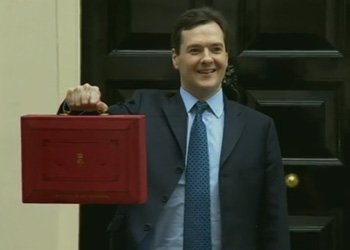
Environmental groups have reacted with anger to George Osborne’s budget today. The Chancellor said the Government was preparing a range of measures to extract the “greatest possible amount of oil and gas from our reserves in the North Sea.”
Jenny Banks, energy policy officer at WWF-UK said the support for oil companies announced in the Budget didn’t make sense: “The Chancellor chose tax breaks for a dying industry with no long term prospects.
“George Osborne is bending over backward to appease the dirty, carbon emitting technologies of yesterday. He seems to be desperate to squeeze every last drop of oil from the North Sea rather than wholeheartedly backing the industrial opportunities of the UK’s huge renewable resource.”
Mr Osborne said he would work with industry to encourage further investment by dropping tax rates. Greenpeace complained the UK’s tax regime for the oil industry was already among the lowest in the world.
Charlie Kronick, a senior energy advisor for Greenpeace said: “George Osborne has turned logic on its head with this tax break for oil companies. It should be the polluters who pay, not hard pressed working families.”
However, trade body RenewableUK welcomed the recognition by Mr Osborne of the “crucial” role renewable energy plays in our energy supply.
Posted on 21 March 2012 by Tom Gibson
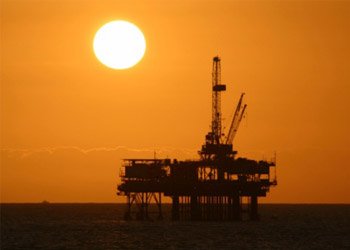
Chancellor of the Exchequer George Osborne has guaranteed tax relief for the decommissioning of North Sea oil and gas as he aims to stimulate investment in Britain’s energy sector. Mr Osborne said his 2012 Budget would support renewable energy, but warned that “environmentally sustainable has to be fiscally sustainable too.”
Mr Osborne told Parliament he wanted to extract the “greatest possible amount of oil and gas from our reserves in the North Sea”.
Ending the uncertainty around decommissioning rigs he stated was key. The Government will introduce legislation in 2013 giving it statutory authority to sign contracts with companies operating in the UK and on the UK Continental Shelf to provide certainty on the relief they will receive when decommissioning their assets.
He added: “We are also introducing new allowances including a £3 billion new field allowance for large and deep fields to open up West of Shetland, the last area of the basin left to be developed.”
New legislation in 2012 could give the Government the power to introduce measures to support investment in brown fields.
Derek Leith, managing partner and head of oil and gas taxation at Ernst & Young in Aberdeen said the policies were good for business: “Today’s announcement promises to encourage significant investment in the North Sea.
“The Budget demonstrates government acceptance that establishing a stable tax environment in the basin will prolong the life of existing infrastructure, deliver millions of more barrels of oil equivalent and boost the Treasury’s coffers via increased tax take.”
Posted on 21 March 2012 by Tom Gibson
A recent poll from YouGov has revealed that more people want to see a cut to fuel duty above any other tax cut. The study, conducted yesterday, showed 31% of people interviewed wanted to see a reduction to duty in light of high pump prices.
When asked who was most to blame for the current high price of petrol and diesel a massive 58% blamed the Government above all else. Global markets received 18% of the vote while the oil companies came out best with only 16% of the vote.
The President of the AA Edmund King tweeted earlier: “Chancellor should freeze duty as minimum… Increasing fuel duty doesn’t necessarily bring extra money as fuels inflation and less is spent elsewhere.”
Posted on 21 March 2012 by Tom Gibson
Oil prices continue to rise this year even though Saudi Arabia’s oil minister claimed there were no supply issues. Mr al-Naimi even said his country could boost supply by another quarter if needed.
Global prices briefly fell following the oil minister’s comments: “My only mission is to convey to you that there is no supply shortage in the market… We are ready and willing to put more oil on the market.”
However, prices rose again and have seen a 15% rise in 2012 so far. Analysts claim the rises are due to continued global unrest, predominantly in the Middle East.
Saudi Arabia is the world’s biggest producer of crude oil, currently delivering 9.9 million barrels per day. The minister said it could boost output to 12.5 million barrels per day if needed.
Posted on 19 March 2012 by Tom Gibson
After receiving the boost of an Emissions Performance Standard from DECC this weekend, the gas industry was told by George Osborne he would work on securing further investment for the North Sea.
The Chancellor or the Exchequer said: “As we work towards a new gas strategy in the autumn, Treasury ministers will host a roundtable with the industry to hear their views on what the Government can do to encourage investment.
“We are also working hard to support the energy sector investment more broadly, including in the UK’s oil and gas resources in the North Sea.”
The Government has given consent for six new plants since May 2010.
The recent EPS announcement was welcomed by industry. Mike Tholen, Oil & Gas UK’s economics director said a move to gas was good for reaching climate change targets: “We have long believed using gas to provide electricity and heat is cost effective and will cut emissions sharply. The technology is proven and it will secure our electricity supplies but the industry has required certainty in order to invest in new capacity.”
Posted on 19 March 2012 by Priyanka Shrestha
The UK oil and gas industries will need a stronger commitment from the Government over the future of the North Sea fields. Without it, the UK could face the loss of “critical” infrastructure, say business advisory firm, Deloitte.
According to Deloitte, the Government’s current system creates too much uncertainty around tax issues. Commitment to the North Sea industry not extending beyond the current Government is also problemmatic.
Derek Henderson, Senior Partner at Deloitte in Aberdeen said: “We would hope to see a commitment from the Chancellor towards providing a contractual guarantee to companies as to the rate of relief that would be available not just within the life of the current Government but far beyond.”
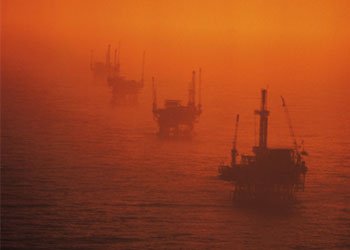
The report also highlights the next 30 years will see almost 500 platforms, 8000 wells and 4 million tonnes of steel decommissioned in the North Sea area, which is expected to cost between £25 billion – £30 billion. Deloitte’s report warns that without the right tax guarantees, the UK might not be able to maximise its reserves.
Chancellor George Osborne is set to announce the report on his 2012 Budget later this week.