Posted on 03 April 2012 by Vicky Ellis
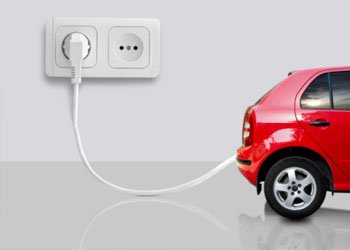
Scientists have created a ‘calculator’ to predict the impact of electric carson the country’s power supplies.
The experts at Northumbria University developed the ‘grid capacity calculator’with a formula to see how electric vehicles (EVs) will affect the national grid.
It measures an area’s existing energy consumption and then works out the likely future effect of increasing numbers of electric cars plugged in for recharging.
The researchers hope the new tool will help planners who are working on smart grids.
Dr Ghanim Putrus, who led the research said: “The resource will help policy-makers, developers and network operators to analyse the impact of electric vehicles in the presence of micro generators and low carbon technologies.
“Any electricity usage scenario can be tested using this tool, giving a picture of what can happen to existing grid infrastructure and helping to plan futurepower networks or smart grids.”
The research was carried out in collaboration with a government programme called ‘Charge your Car’ which is currently installing electric vehicle charging points across North East England.
Posted on 03 April 2012 by Vicky Ellis
London Mayoral candidate Ken Livingstone wants to set up an Energy Co-Operative for the capital city, which he claims could save Londoners £120.
His campaign literature claims the London Energy Purchasing Co-operative “will be able to purchase energy on the wholesale markets, giving Londoners a cheaper alternative to rip-off energy suppliers”.
It would do this “through harnessing the buying power of Transport for London, the biggest purchaser of electricity in London, and the rest of the GLA Group”.
Mr Livingstone said: “Soaring energy bills are hitting Londoners hard. To break the stranglehold of the ‘Big Six’ and get a better deal in the long-term we will need more competition. I will set up a London Energy Co-Operative that will seek to break the power of rip-off energy companies and provide a cheaper alternative for the millions of families that are struggling with their bills.”
Mr Livingstone claims energy bills have risen by more than £300 per year while Mayor Boris Johnson has been in office.
A spokeperson for Mr Livingstone told ELN that individuals will effectively be able to “piggyback” on the larger buying power of Transport for London and the Greater London Authority.
They point to market modelling, “based on international comparisons” with similar schemes in the States and Belgium, which suggests the Co-Op could save homeowners more than 10% on their bills.
Fellow candidate and incumbent Mayor Boris Johnson takes a different approach to rising bills – in August last year he began a set of programmes for ‘retrofitting’ homes and making them more efficient to help homeowners save money. He claims this could shave £100s off annual fuel bills.
Posted on 02 April 2012 by Priyanka Shrestha
Energy suppliers fail to call back when resolving customer complaints, says Ofgem.
In their research called ‘Customer Complaints Handling’, Ofgem found suppliers failed to notify about complaints being resolved and only a third received any communication of apology or compensation. Some customers have ‘given up’ contacting suppliers regarding complaints.
The regulator claims power companies need to try harder, however, the research also shows improvement in overall customer satisfaction since 2010.
In response to the research, Audrey Gallacher, Director of Energy at Consumer Focus said: “It’s positive that there has been some improvement in how customer’s energy complaints are handled. However there is still a very long way to go – with around half of consumers dissatisfied.
“It is unacceptable that many customers have to go through a long, drawn-out process to get their problem resolved. There must be clear progress on this from suppliers.”
Posted on 02 April 2012 by Tom Gibson
An E.ON bigwig has admitted power firms face a real challenge in regaining customer trust. Sara Vaughan told an audience it was imperative for firms to get consumers on board before prices rose too levels that were too high.
E.ON’s Director of Group Regulatory and Sustainable Development told an audience at Marketforce’s Smart Utilities Forum: “What we may have gained in choice, I believe we as energy companies have lost in trust. Customers no longer trust energy companies to do the right thing for them and this just can’t go on.”
She said it was important for the utilities to connect with energy users if those firms were to start introducing new energy saving technologies such as smart meters and expect customers to get on board.
According to recent statistics, consumer trust is at an all time low. Mrs Vaughan said this was reflected in their customer feedback: “If you look at the number of complaints we received in the fourth quarter at the end of last year, I’d expect you to be shocked. There were nearly 280,000 complaints in that period. That’s 3,729 per 100,000 customers… That number is far too high.”
Power companies are aware their prices are rising and probably expect greater backlash from their customers. Mrs Vaughan said trust had to be clawed back if future changes were to be made: “We need to move to what I call ‘engage and save’- simplifying tariffs, engaging with customers so they’re not only on the right tariff, but we’re also helping them save money and energy.”
“Energy efficiency has to underpin everything we do if bills are to remain affordable for the majority of customers.”
Posted on 30 March 2012 by Tom Gibson
Energy debt is on the up, according to consumer action group uSwitch. An annual study shows that customers owe more this year than last, at £131 on average.
Ann Robinson, Director of Consumer Policy at uSwitch said: “With households still struggling to absorb last year’s price hikes, energy debt is on the rise again.
“Although suppliers have cut their prices this year, the average reduction of £41 or 3.2% doesn’t come near the average increase of £224 or 21% seen since the end of 2010 – as a result consumers will continue to struggle to pay their bills and debt will continue to grow.”
According to the statistics, 35% of those in debt owe more than they did a year ago, while just 13% owe less. The average amount owed to suppliers has risen 15% from 2008, reflecting the 53% or £433 hike in the cost of energy seen since then.
Mrs Robinson added: “Those in energy debt can face a catch-22. Despite knowing they could reduce their bills by moving to a cheaper energy plan, consumers can see debt as a barrier to switching.”
Posted on 30 March 2012 by Sumit Bose
ELN investigates the worrying rise in power cable theft in the UK and what the energy sector and police can do to stop it.
Posted on 28 March 2012 by Tom Gibson
E.ON has become the highest rated energy company in Germany, in terms of how sustainable it is. Scoring 77.7 out of a 100, E.ON trails three companies from the automotive and consumer goods industries (BMW, Henkel and Volkswagen).
The company climbed 16 places from the last analysis completed in 2009 by investment services provider, Sustainalytics, which compares the sustainability of Germany’s 30 largest listed companies.
The analysis is based on the ‘ESG approach’, which focuses on Environmental, Social and Governance processes. It records parameters such as supply chain standards, social commitment as well as the inclusion of ecological factors in the development of products and services.
Posted on 28 March 2012 by Priyanka Shrestha
Two-thirds (71%) of consumers are concerned about fuel sources for their electricity, according to an energy supplier.
Good Energy claims almost half of British consumers are unaware the majority of fuel used to generate electricity in the UK is imported. Its report suggests the UK imports fuel from nearly 40 countries including Australia, Russia and Qatar.
But the research shows only 2% out of the 82% of respondents who claimed to make efforts to cut electricity usage have actually done so following government campaigns. The supplier says the campaigns are not creating enough awareness and claims the figures show “there’s a long way to go before government messages make an impact.”
Further figures show 3% of Britons claim to generate their own renewable electricity and 41% would be interested in doing so.
Juliet Davenport, CEO of Good Energy said: “One of the reasons Good Energy was set up was to raise awareness of where our energy comes from so people will value it more and use it less. Giving people greater control and ownership of their energy use is key to this.”
Posted on 27 March 2012 by Priyanka Shrestha
Connecting smart grids in EU countries could help high electricity demands in the UK, a new report suggests.
The research by ReportsnReports claims interlinking the smart grids between the UK and EU could make full use of renewable resources in Europe. Smart grids send information about energy use between suppliers, distributors and consumers.
Electricity produced by hydropower in Norway could be transferred to the UK via smart grid interconnection and help Britain cope with the rising energy demand, the report suggested.
The EU plans to develop smart grid infrastructures over the next eight years.
Posted on 26 March 2012 by Priyanka Shrestha
EDF Energy has announced a new scheme which it claims could give nearly 150,000 elderly customers lower energy bills.
The launch of the ‘Customer Commitments’ scheme today claims to deliver “Fair Value, Better Service and Simplicity” for customers. The energy company says customers the government identifies as “most in need” will automatically get its cheapest prices. This is expected to benefit nearly 150,000 customers in the coming year.
Vincent de Rivaz, EDF Energy’s CEO said: “If the most vulnerable and elderly customers are not participating in the market they are not getting the benefits of competition. Our step means that even if they do not actively switch, they will get our best prices.”
EDF is also launching a new product ‘Blue +Price Promise’ in April. It will let customers know if they could save more than £1 per week compared to supplier at typical use. It claims it will not charge termination fees if customers wish to leave.
Mr Rivaz added this is “an industry first”.