Tag Archive | "emissions"

South Korea could have ‘world’s highest’ carbon prices

Tags: , , , , , , , ,

South Korea could have ‘world’s highest’ carbon prices

Posted on 15 May 2013 by Priyanka Shrestha

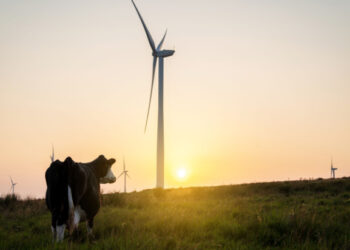
Carbon prices in South Korea (pictured) could reach the penalty level of $90 (£59) per tonne of CO2 – making it the highest in the world.

The forecast from analysts at Bloomberg New Energy Finance (BNEF) comes as the nation is set to launch a scheme in 2015 that will cap around 70% of its greenhouse gas emissions.

The researchers say the predicted high prices – which exceeds any other emissions trading system (ETS) – reflects the nation’s ambitious reduction targets, the relatively high cost of cutting emissions in the country and restrictions on the use of offset credits from abroad.

Richard Chatterton, Lead Analyst for carbon markets at BNEF said: “If the Government implements the scheme without any changes, it will have major implications for Korean companies. A carbon price will lead to higher power prices and impose additional costs on industrial firms. The Government is mitigating the impact for covered entities by handing out most allowances for free but costs could still rise quickly.”

The report forecasts that if South Korea sticks to its national target of cutting emissions to 30% below business-as-usual (BAU) levels by 2020, emissions reductions through the planned ETS would have to reach 836 million tonnes between 2015 and 2020.

The South Korean Government has yet to finalise the design of the ETS and BNEF says it will need to carefully consider the options. It suggests the Government should ease the reduction target, allow greater use of international offset credits before 2020 and link its programme with other carbon markets to provide a wider range of lower cost emissions reduction options.

Comments (0)

$9m US grant for firms to cut fleets’ diesel emissions

Tags: , , , , , , , ,

$9m US grant for firms to cut fleets’ diesel emissions

Posted on 13 May 2013 by Priyanka Shrestha

American firms with fleets of diesel engines can apply for funding from a $9 million (£5.8m) pot to begin new projects to reduce emissions.

The US Environmental Protection Agency (EPA) made the announcement as part of the National Clean Diesel Funding Assistance (DERA) programme, which aims to improve air quality by reducing pollution and saving fuel. According to the EPA, clean diesel funding generates up to $13 (£8.4) of public health benefit for every $1 (£0.64) spent on diesel projects.

Projects include those that cut air pollution from older school buses, transit buses, heavy-duty diesel trucks, marine engines and other diesel engines.

Between 2008-2010, more than 50,000 vehicles and equipment in a variety of industries have been retrofitted or replaced and the projects helped reduce emissions by at least 203,900 tons of nitrogen oxide and 12,500 tons of particulate matter emissions over the lifetime of the engines.

The EPA has awarded more than 500 grants across the US since the first year of the DERA programme in 2008.

Comments (0)

New project to reduce heating and cooling emissions

Tags: , , , , , , , ,

New project to reduce heating and cooling emissions

Posted on 07 May 2013 by Priyanka Shrestha

UK researchers are working on a £5.25 million project to develop energy efficient heating and cooling technologies to help cut the nation’s energy needs and reduce emissions.

Funded by the UK Research Councils’ Energy Programme, the Interdisciplinary centre for Storage, Transformation and Upgrading of Thermal Energy (i-STUTE) aims to reduce energy usage across a wide range of technologies, including domestic heating, thermal energy storage and industrial heat pumps.

The centre also aims to help the nation achieve its target of cutting greenhouse gas emissions by 80% by 2050 as more than 40% of fossil fuels are currently used for low temperature heating and 16% of electricity for cooling.

Professor Bob Critoph, Director of i-STUTE said: “The technologies we use to heat and cool the buildings we live and work in will have to change if we are to meet our environmental targets. This is not simply a major engineering challenge, a great deal of work also needs to be done to make sure this technology is not only accessible and appealing but will be readily adopted by households and businesses. i-STUTE aims to tackle these two challenges by integrating engineering, behavioural economics and policy research.”

The University of Warwick, London South Bank University, the University of Ulster and Loughborough University will be working on the project.

Comments (0)

‘UK’s largest’ natural gas bus fleet in Reading

Tags: , , , , , , , , , ,

‘UK’s largest’ natural gas bus fleet in Reading

Posted on 02 May 2013 by Priyanka Shrestha

The “UK’s largest” natural gas-powered bus fleet is set to hit the roads of Reading this month.

Operated by Reading Buses, the ‘Greenwave’ service vehicles (pictured) will run solely on Compressed Natural Gas (CNG), which produces no hydrocarbons and has “virtually no carbon emissions”. The buses are expected to improve the air quality and help cut fuel costs.

Reading Buses already operate 31 electric hybrid buses, which means 40% of the company’s fleet will now be classified as super-low emission vehicles with the 20 new additions.

Councillor Tony Page, Reading Borough Council’s Lead Member for Regeneration, Transport and Planning, said: “Reading Council has long championed environmental improvements, especially reductions of greenhouse gases and other air pollutants. These new buses represent a very real step forward and these services will soon be able to claim to be one of the first genuinely carbon neutral bus services in Britain.”

The service will connect Reading town centre with Green Park – a 195-acre parkland and business community.

Comments (0)

$100m energy efficiency loan for Russian homes

Tags: , , , , , , , ,

$100m energy efficiency loan for Russian homes

Posted on 29 April 2013 by Priyanka Shrestha

A London-based bank has launched a nationwide lending programme for householders in Russia (pictured) which it claims is the first of its kind to make the nation’s homes more energy efficient.

The $100 million (£64.5m) loan from the European Bank for Reconstruction and Development (EBRD) will be lent through local private banks and aims to help modernise Russia’s ageing housing stock.

Russia needs to spend between 220 billion roubles (£4.6bn) to one trillion roubles (£20.7bn) a year between now and 2035 in order to make its housing energy efficient, the EBRD suggests.

Russia is believed to be one of the world’s most intensive energy users and its residential sector is the second largest energy consumer after industry, accounting for 26% of total energy usage. It uses three times more energy per square metre than housing in EU countries with similar weather conditions, according to the EBRD.

The energy efficiency projects funded by the EBRD in Russia so far – more than €2.2 billion (£1.9bn) since 2006 – is said to have saved nearly nine million tonnes of oil equivalent and cut 17.5 million tonnes of greenhouse gas emissions every year.

Comments (0)

‘UK’s carbon footprint has actually grown’

Tags: , , , , , ,

‘UK’s carbon footprint has actually grown’

Posted on 24 April 2013 by Vicky Ellis

Instead of shrinking the UK’s carbon footprint has actually grown, the government’s climate change advisors claimed today.

In its latest report the Committee on Climate Change found emissions reductions of around 20% over the last two decades has limited growth in the UK’s carbon footprint.

However despite this the report also estimates the carbon footprint has increased by 10% or more.

The report states: “As a result, the UK is now one of the world’s largest net importers of emissions, with a carbon footprint that is around 80% larger than its production emissions, reflecting the relatively small share of manufacturing in UK GDP.”

It pins the blame on imports as wealthier Brits buy more goods from abroad and the fact manufacturing in other countries has sprung up.

The Committee said this shows the need to slash global emissions. David Kennedy, Chief Executive of the CCC said: “Clearly we also need to reduce imported emissions. This highlights the fundamental need to reduce global emissions in order to achieve climate objectives and to do this through a new global deal.”

However the report does not suggest the nation’s emissions reductions were down to firms ‘offshoring’ or moving operations abroad because of low-carbon policies like the CRC. Instead, it says, “production emissions fell due to reductions in emissions from power generation and non-CO2 gases (e.g. methane from waste).”

Business groups were quickly on the defensive, advising the Government to remember energy intensive users are at the mercy of climate policy changes.

Rhian Kelly, Director for Business Environment policy at business trade group CBI said: “The Government has the building blocks in place but they must now follow through on their commitments to shield energy-intensive industries from new energy costs beyond this spending period and by providing exemptions from the Electricity Market Reforms.”

Angela Knight, Chief Executive of Energy UK added: “Government policies already account for 9% of a typical household energy bill. As any additional costs are considered, affordability for households and competitiveness for industry must be a priority.”

Environmental group WWF conceded that the impact of policies on energy intensive users “must be taken seriously”, they must be proportionate and “taken on the basis of transparent criteria to avoid the risk of over-compensation seen in countries like Germany.”

Comments (0)

Renewables investment will jump 230%

Tags: , , ,

Renewables investment will jump 230%

Posted on 23 April 2013 by Vicky Ellis

Cash poured into renewables could jump 230% over the next two decades, according to new predictions.

The “likeliest” scenario is that global investment will jump to $630bn (£414bn) per year by 2030, found Bloomberg New Energy Finance (BNEF).

Renewables will account for between 69% and 74% of new power capacity added by 2030 worldwide. That’s under the “new normal” whereas a more conservative, “traditional” scenario suggests $470bn will change hands every year.

Under the “barrier busting” scenario, capital needs for renewable energy could smash $880bn a year by 2030 – which would spell a total of $9.3 trillion invested from 2013.

The predictions are drawn from BNEF’s Global Energy and Emissions Model, a model which analyses the main factors which will sway the future energy market.

Guy Turner, BNEF’s head of economics and commodities suggested renewables are set to become an “anchor” for the energy world.

He said: “This is the first time we have produced such detailed analysis of the future world energy system under different scenarios. It highlights that, in spite of the recent news showing a downturn in clean energy investment since 2011, renewable technologies will form the anchor of new generating capacity additions, even under a less optimistic view of the world economy and policy choices.”

He went on: “The main driver for future growth of the renewable sector over this timeframe is a shift from policy support to falling costs and natural demand.”

Comments (0)

Asda owner Walmart hatches energy plan to save $1bn

Tags: , , , , , ,

Asda owner Walmart hatches energy plan to save $1bn

Posted on 16 April 2013 by Vicky Ellis

US supermarket giant Walmart unveiled yesterday “dramatic” plans to ramp up energy efficiency and hit its target to be powered by100% renewable energy – which it believes will save $1billion (£650m) a year in energy savings once they are achieved.

The supermarket which has 10,500 stores around the world under different brands – including Asda in the UK – wants to generate or buy 7 billion kWh of renewable energy globally every year, a 600% increase over 2010 levels. It expects these efforts will be equal to eliminating the need for roughly two US fossil fuel power plants.

It also pledged to slash the energy used for every square foot of property it uses: it intends to reduce the kWh/sq. ft. energy intensity by 20% compared to 2010 levels. The company has committed to reaching these two targets by December 31, 2020.

At the firm’s Global Sustainability Milestone Meeting yesterday, President and CEO Mike Duke said: “More than ever, we know that our goal to be supplied 100 percent by renewable energy is the right goal and that marrying up renewables with energy efficiency is especially powerful. The math adds up pretty quickly – when we use less energy that’s less energy we have to buy, and that means less waste and more savings. These new commitments will make us a stronger business, and they’re great for our communities and the environment.”

The firm said the measures would avoid emitting nine million metric tons of greenhouse gas (GHG) emissions, the equivalent of taking 1.5 million cars off the road – which would counter the growth of emissions from the company’s largest GHG source, energy used to power buildings, by 2020.

Mr Duke suggested finding cheap, cleaner energy would be better for its 200million customers’ wallets: “When I look at the future, energy costs may grow as much as twice as fast as our anticipated store and club growth. Finding cleaner and more affordable energy is important to our everyday low cost business model and that makes it important to our customers’ pocketbooks.”

In the United States alone, Walmart hopes to install solar power on at least 1,000 rooftops and facilities by 2020.

Comments (0)

npower awarded Carbon Trust Standard

Tags: , , , , , , ,

npower awarded Carbon Trust Standard

Posted on 11 April 2013 by Priyanka Shrestha

Energy supplier npower is the latest company to be awarded a ‘green’ standard for its efforts in reducing carbon emissions.

Launched in June 2008, the Carbon Trust Standard, which verifies the carbon footprint and emission reductions of organisations, was awarded to npower for measuring, managing and reducing its greenhouse gas emissions.

Npower claims it also achieved a 16% decrease in electricity usage last year, putting it on track to meet its 2014 target of a 38% cut in carbon intensity of its offices compared to 2008 levels. The savings are believed to have been made through lighting upgrades, heating and ventilation systems and monitoring and minimising energy use.

Darran Messem, Managing Director of Certification at The Carbon Trust said: “Energy suppliers have a big role to play in promoting energy efficiency and helping customers to reduce their carbon footprints. By putting sustainability at the heart of its own buildings, npower is leading by example when it comes to using energy as efficiently as possible.”

Paul Massara, CEO of npower added: “The certification demonstrates that big energy efficiencies can be made when you have the right tools for the job. The carbon reductions we’ve made can be achieved by other businesses on their own sustainability journeys.”

More than 650 organisations have achieved the Carbon Trust Standard since its launch, collectively cutting their emissions by more than 4.3 million tonnes and cutting gas, electricity and fuel costs by £645 million.

Comments (0)

White rooftops ‘could cool the world efficiently’

Tags: , , , , ,

White rooftops ‘could cool the world efficiently’

Posted on 10 April 2013 by Vicky Ellis

It could be time to get the white paint out – as an American energy efficiency pioneer believes white rooftops could cool the world efficiently.

Arthur H Rosenfeld, physicist and former Commissioner of the California Energy Commission has suggested that on a clear day, a white roof is only 5°C to 10°C warmer than the ambient air.

In contrast, a conventional dark roof can get 40°C to 50°C hotter than the outside air, he explained.

Writing in the International Energy Agency’s journal, the US scientist said: “My latest obsession is a campaign for white roofs in climates where summers are uncomfortably hot. White roofs not only reduce energy bills and dampen the urban heat island effect, but they also cool the world.”

He said that a cooler roof means the space beneath the roof needs less electricity for air conditioning, saving money and avoiding emissions of CO2 and other pollutants at the power plant.

Secondly, he went on, by reflecting more of the sun’s energy back into space, white roofs “cancel a small percentage of the heating effect from CO2 that has already been emitted”: “This is called the “albedo effect”, based on the Latin word for whiteness. As reflective arctic ice recedes rapidly, we need all the albedo we can get.”

Dr Rosenfeld argued that every 100 square metres of roof area that is white instead of black cancels the warming effect of 10 tonnes of CO2 over the roof’s lifetime (typically 20 years). The cumulative effect of converting most flat roofs in warm cities to white would cancel more than one gigatonne of carbon every – as much as taking half the world’s cars off the road for 20 years, he explained.

Comments (0)